Baccarat Tie Bet Odds: When to Play and When to Pass
Game Overview: How the Baccarat Tie Bet Works
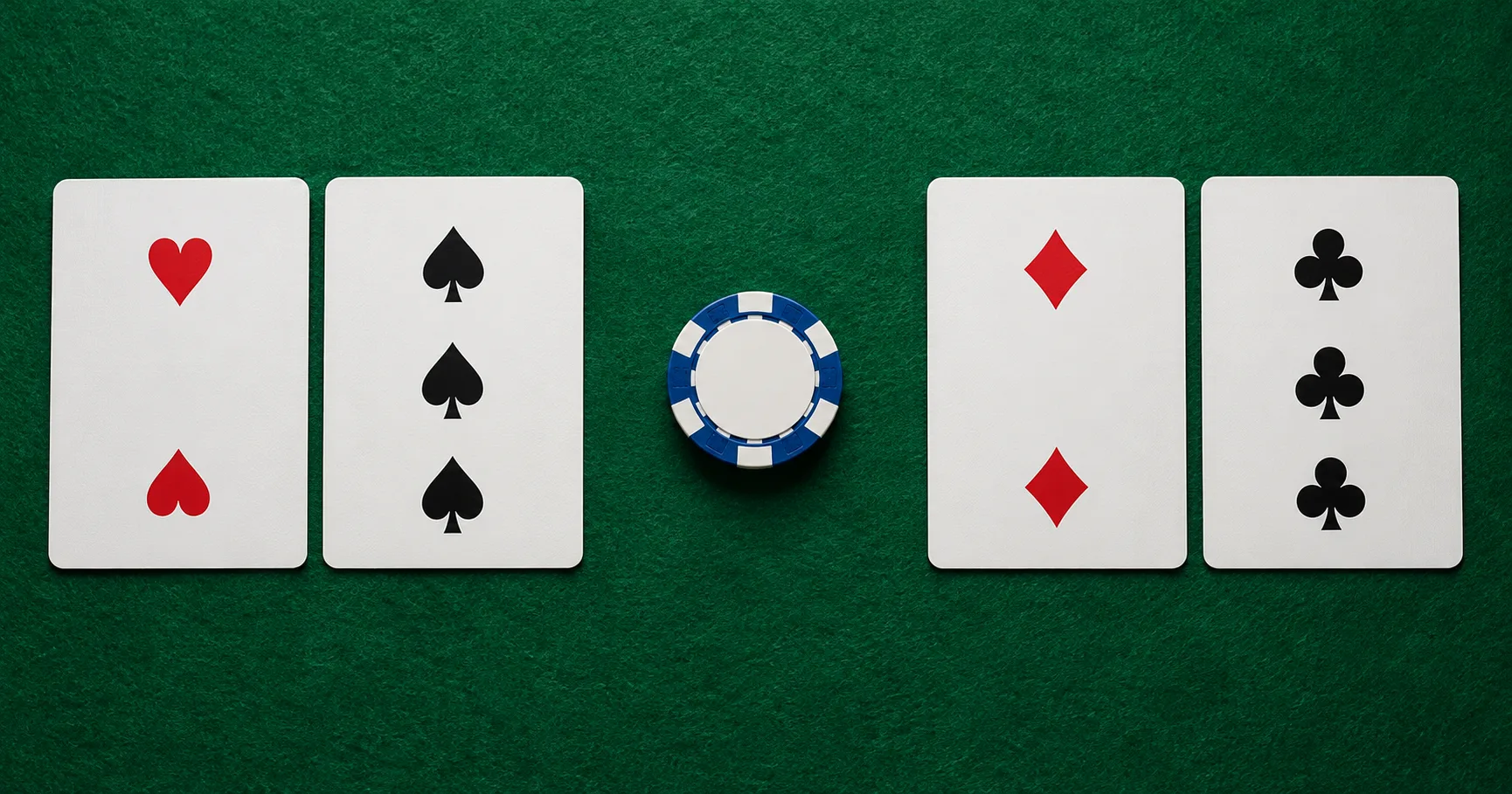
Baccarat tie bet odds matter because a large payout can hide an expensive wager. A Tie bet wins when the Player and Banker hands finish with the same total. You are betting on equality between the hands, rather than choosing which side will finish closer to nine. The decision happens before the cards are dealt; the drawing rules then determine the result.
For standard eight-deck baccarat, a tie occurs on approximately 9.52% of hands. That is roughly once in every 10.5 hands over the long run, but it is not a schedule. Several ties can cluster together, and long stretches without one are entirely possible. Neither situation tells you that the next hand must restore a balance.
The first practical check is the payout displayed beside Tie. An 8:1 payout means an eight-unit profit plus the return of your original stake. A 9:1 payout means a nine-unit profit plus your stake. Those offers reward the same outcome differently, so choosing between them materially changes the cost of the bet.
What Happens to Your Stake?
If you stake ₱100 on Tie at 8:1 and the hands tie, your profit is ₱800 and your total return is ₱900. At 9:1, the same winning stake returns ₱1,000, including ₱900 profit. If the hands finish with different totals, the Tie stake loses. These calculations assume a conventional profit-to-stake payout display.
A separate Player or Banker bet normally pushes when the hands tie in standard baccarat: its stake is returned. That does not mean it receives the Tie payout. Read the table rules before combining wagers, especially on variants with unusual settlement conditions. For the basic dealing sequence, see baccarat rules for beginners.
RTP and Volatility: Why the Tie Payout Matters
Return to player, or RTP, describes the theoretical share of stakes returned over a very large number of bets. House edge is the complementary share retained by the game in that mathematical model. Neither measure predicts the result of your session. The following figures use standard eight-deck baccarat and rounded probabilities; different deck counts or rules can change them.
| Tie payout | Approximate win probability | Theoretical RTP | House edge |
|---|---|---|---|
| 8:1 | 9.52% | 85.64% | 14.36% |
| 9:1 | 9.52% | 95.16% | 4.84% |
The calculation includes the returned stake. At 8:1, a winning one-unit wager returns nine units, so RTP equals the tie probability multiplied by nine. At 9:1, multiply that probability by ten. Increasing the payout improves expected return without making ties more frequent. This distinction is useful when two tables look almost identical.
Fair profit odds for a tie under these assumptions would be approximately 9.51:1. Both 8:1 and 9:1 fall below that level, which explains their negative expected value. A 9:1 table is the better Tie offer when everything else is equal, but the higher payout does not create a profitable betting system.
What These Percentages Mean for a Session
Over ₱1,000 in total Tie stakes, the mathematical expected loss is about ₱143.60 at 8:1 or ₱48.40 at 9:1. Total stakes means turnover: ten ₱100 wagers count as ₱1,000 even if you reuse money returned from earlier wins. Actual results can be much better or worse than those averages.
The Tie bet has a lumpy return pattern: frequent losses interrupted by larger winning returns. That makes short sessions unpredictable. A small starting balance can disappear before a tie arrives, while one early win can make an expensive wager feel unusually generous. Understand the difference through RTP and house edge explained.
For comparison, standard eight-deck Player betting has a house edge of about 1.24%, while Banker with the usual 5% commission is about 1.06%. Those main bets are mathematically cheaper than either Tie payout above. Alternative Banker rules require a fresh comparison; consult banker versus player bets before switching variants.
Symbol Guide: Cards, Totals and Table Labels
Baccarat uses card values and betting areas rather than slot symbols. A hand's score is the final digit of its card-value sum. For example, seven plus eight totals fifteen, which becomes a baccarat score of five. Suits do not determine whether the standard Tie bet wins.
- Aces count as one, and cards from two through nine count at face value.
- Tens, jacks, queens and kings count as zero.
- Player and Banker identify the two hands, not decisions about who physically deals.
- Tie identifies a wager on equal final totals after any required third cards.
- Pair labels refer to separate side bets with their own conditions and payouts.
Two hands can tie without sharing matching ranks or suits. A Player hand containing a two and a three ties with a Banker hand containing an ace and a four: both total five. Conversely, two cards of the same rank can form a pair without making the final Player and Banker totals equal.
Read the actual payout panel rather than relying on a familiar table colour or layout. A label such as “suited tie” or “specific total tie” describes a different wager and cannot inherit the standard Tie probabilities above. Review baccarat side bets explained before selecting an unfamiliar betting area.
Strategy Tips: When and How to Approach Tie Bets
If your priority is keeping the mathematical cost low, passing on Tie is a sound decision. There is no requirement to cover every betting area. If you choose it for occasional entertainment, decide the stake and maximum spend before play begins. Treat each losing wager as spent money, not a balance the table owes you.
Use a Fixed Decision Checklist
- Confirm the exact Tie payout and whether it describes profit or total return.
- Check the deck count and game rules before applying standard probability figures.
- Prefer 9:1 over 8:1 when comparing otherwise equivalent standard Tie bets.
- Set a fixed stake that fits a separate, affordable entertainment allowance.
- Stop when your spending or time limit arrives, even if no tie has appeared.
A practical budget starts with money you can lose without affecting essentials. For example, a ₱300 Tie allowance divided into ₱20 stakes permits fifteen losing wagers before that allowance is exhausted. It does not guarantee fifteen minutes of play or a winning hand. If the table minimum exceeds your chosen stake, find a suitable table or skip the wager.
Keep any main-bet budget separate when tracking the session. A Banker win can obscure repeated Tie losses if you only look at your overall balance. Recording both stake types makes the cost visible. Use baccarat bankroll management to plan your spending before opening a live table.
Why Waiting for a Tie Does Not Create an Edge
A scoreboard showing a long gap between ties does not make the next tie “due.” In a dealt shoe, exact probabilities can vary with remaining card composition, but a sequence of displayed outcomes is not a dependable shortcut to identifying an advantage. The ordinary player should not convert a losing streak into a reason to increase stakes.
Doubling after losses also leaves the underlying house edge unchanged. It increases the money exposed and can quickly meet a table maximum or your own budget limit. A fixed stake keeps spending easier to control; it does not improve the chance of winning. See baccarat betting systems and their limits for the arithmetic behind progression betting.
Recommended Platforms: Choose the Table by Its Rules
A useful platform comparison begins with the game you can actually open. Check the baccarat rules panel, Tie payout, minimum stake and settlement details before depositing. A prominent promotion or polished live studio does not improve baccarat tie bet odds. For this wager, the specific table configuration matters more than the surrounding presentation.
- Look for a rules panel that clearly distinguishes standard Tie from additional side bets.
- Choose minimum stakes that fit your planned allowance without forcing larger wagers.
- Check deposit and withdrawal conditions, including fees and account verification steps.
- Look for accessible session reminders, spending limits and account exclusion controls.
If you plan to use a promotion, check whether baccarat qualifies, how much its wagers contribute toward any play-through requirement, and whether side bets are excluded. A better advertised reward can be unsuitable when its conditions conflict with your intended play. Read understanding casino bonus terms before opting in.
Use comparing live baccarat tables to organise your checks, then confirm the current details on the selected platform. Play only if you meet the applicable age and eligibility requirements. If stopping becomes difficult, end the session and use responsible gambling support to find practical help.