Wheel Demo Maths: What Free Play Tells You About Real Stakes
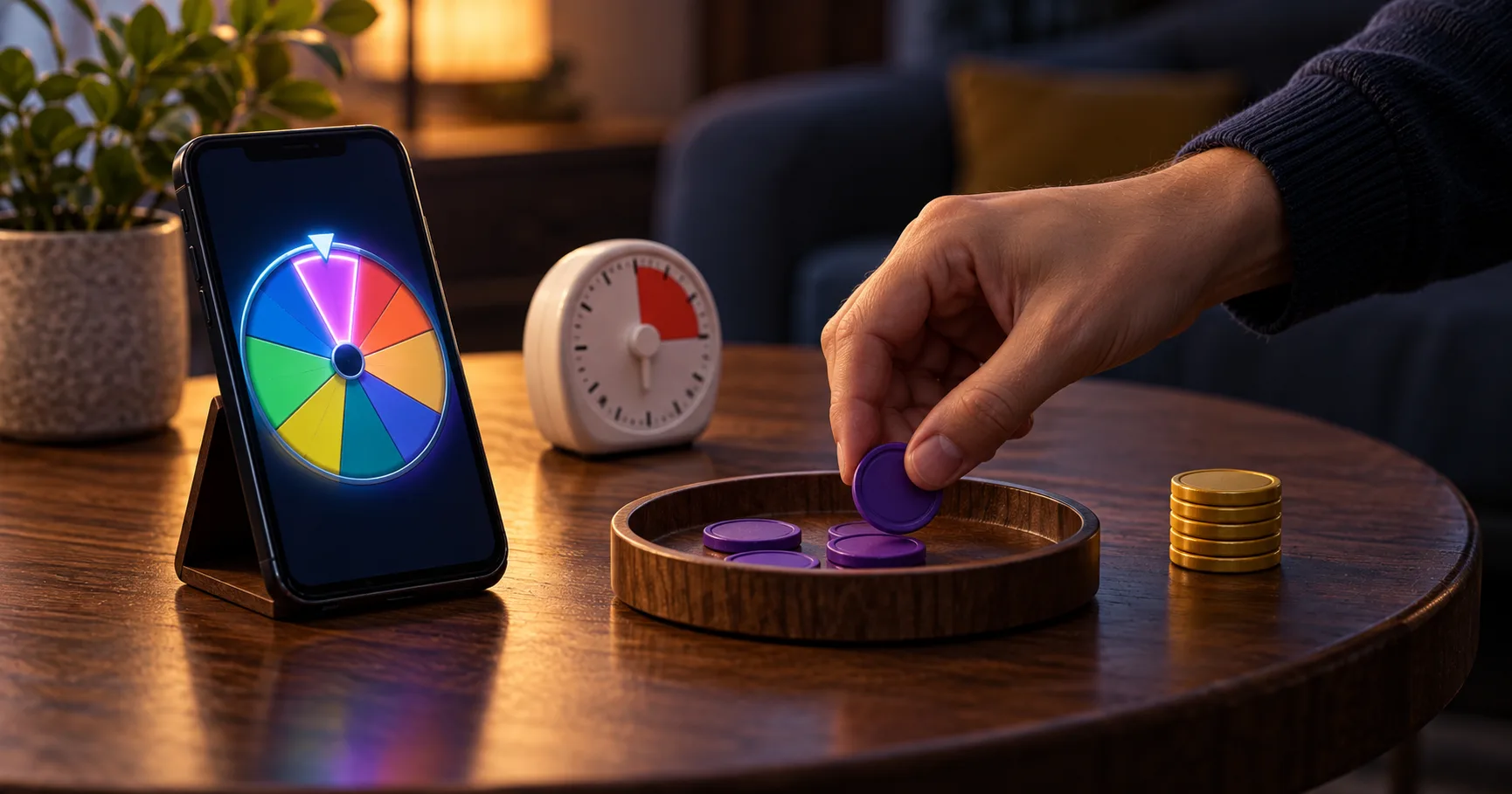
Suppose a hypothetical Wheel has ten equally likely sections. Four are red, and a red bet returns twice the stake when red lands, including the original stake. You choose red for twenty demo spins at a pretend PHP 10 per spin.
Twenty spins at PHP 10 create PHP 200 in total stakes. Say red lands twelve times. Those hits return 12 × PHP 20, or PHP 240. Subtract the PHP 200 staked, and the demo balance finishes PHP 40 ahead.
That result feels encouraging on a phone screen. Yet the assumed chance of red on any spin is four in ten. Across twenty spins, the average number of red results would be eight, not twelve. Eight returns of PHP 20 would total PHP 160 against PHP 200 staked, an average loss of PHP 40. The winning trial and the underlying arithmetic can both be true.
This is the useful question for free play: what did the session show about the game, and what did it leave uncertain? Demo mode can help you learn the controls in a short break. It cannot turn a small run of favorable results into a reliable forecast for cash play.
Separate the wheel design from your sample
In the example, each section has the same chance of being selected. Four red sections therefore give red a 4 ÷ 10, or 40%, chance per spin. A winning red bet returns PHP 20 on a PHP 10 stake. A losing bet returns nothing, so the full PHP 10 stake is lost.
The expected return per spin is 0.40 × PHP 20, or PHP 8. Against a PHP 10 stake, that is an expected loss of PHP 2 per spin. This calculation describes an average across many comparable spins under the stated assumptions. It does not assign a PHP 2 loss to each individual spin.
A real Wheel may use different section sizes, selection rules, bet types, or payout tables. Do not copy the example’s 40% chance or payout into another game. To work out a particular bet, you need its possible outcomes, the chance of each outcome, and the amount returned for each one. If a wheel’s sections are not equally likely, counting colored sections alone will not establish the odds.
Demo chips are also separate from Free Credits. A demo balance is a practice counter unless the game clearly states otherwise; promotional credit has its own applicable terms. Neither label tells you the probability of a Wheel result.
Why twenty spins can flatter a weak bet
The twelve red hits in the opening example are a sample result, while eight is the expected count under its assumptions. The difference matters most when a mobile player tries only a few rounds between other tasks. A short sequence contains too little information to make its hit rate a dependable estimate of the next sequence.

Each spin in the hypothetical model starts with the same 40% red chance. Twelve earlier red results do not make red safer, and a streak of misses does not make it due. That remains true only if the game actually uses independent spins with stable rules. If the displayed rules describe a different mechanism, use those rules instead.
There is another trap in a balance display. The PHP 40 demo gain hides PHP 200 in total stakes, because the same balance can fund repeated spins. A player who remembers only the closing balance may miss how much was put at risk across the session. Recording stakes and returns separately makes the result easier to interpret.
Record the selected bet and stake for each trial, so a changed bet type does not get mixed into one hit rate.
Count every completed spin, including losses and interrupted-looking moments that later resolve, rather than remembering only the visible wins.
Add all stakes to find total wagered, even when winnings from earlier spins funded some of the later rounds.
Add actual returns separately, then subtract total stakes to see the session result without relying on the balance animation.
You can keep that record in a phone note without streaming a long session. A compact tally is more useful than a screenshot of one exciting result. It still describes what happened in the demo, not what must happen next.
Translate a pretend balance into a cash limit
Now imagine you have PHP 500 available for entertainment and are considering the same hypothetical PHP 10 bet. The stake is 2% of that amount, because PHP 10 ÷ PHP 500 = 0.02. Twenty spins would create PHP 200 in total stakes, even though you begin with only PHP 500.
If the twenty cash spins happened to match the demo’s twelve wins, the arithmetic would again show a PHP 40 gain. That is one possible outcome, not a reasonable budget assumption. Under the toy model, the expected result for twenty comparable spins is a PHP 40 loss. Actual outcomes can be above or below that average, including a loss larger than PHP 40.
A practical limit therefore needs two parts: how much cash you can lose and how much time or data you will spend. A PHP 500 balance is not a target to cycle through the wheel. For example, you might set a hypothetical PHP 100 loss limit before opening the game. If your balance falls by PHP 100, the limit has been reached regardless of how many spins remain in your break.
Choose an entertainment amount you can afford to lose, rather than treating a favorable demo balance as available income.
Set a smaller session loss limit before playing, so a brief break cannot quietly consume the full amount.
Check the cash stake shown before each spin, especially if the game remembers a larger amount from an earlier session.
Stop when the chosen loss or time limit is reached, even if the last few outcomes make another spin tempting.
A Bonus can affect which balance funds a cash spin or what conditions apply to its proceeds. Check the relevant terms before using one. Demo results do not establish those terms, and the hypothetical PHP 500 example does not describe any offer.
Use free play for mechanics, not a profit forecast
Demo mode beats cash play when the question is operational: can you see the chosen section, understand the displayed return, and avoid an accidental stake change on a small screen? Practice also lets you notice whether an animation finishes before the next control becomes active. Those checks cost no cash when the mode is genuinely free.
Cash play answers a different question: how you respond when a loss affects your own money. A player may calmly accept ten demo misses and feel pressure after two cash misses. That change in behavior is not a flaw in the arithmetic. It means the demo cannot fully rehearse the decisions made under a real loss limit.
For a mobile-data player, a short demo is often more useful than a long one if the goal is to learn the interface. Once the controls and rules are clear, extra spins mainly add more sample results. They do not erase the need to check the cash stake and stop limit separately. The better option depends on the question you are trying to answer.
Check what transfers before switching modes
The moment between demo and cash play deserves its own check. A familiar wheel animation can make the two modes feel identical, while balances, available bets, and applicable terms may differ. Treat the cash screen as a fresh decision rather than a continuation of the practice session.
Confirm that the selected bet and return shown in cash mode match the version you practiced, or recalculate using its displayed rules.
Verify that the stake is denominated in real PHP and fits the session limit you chose before opening cash mode.
Look at the available balance and any conditions attached to it, because practice chips do not transfer into withdrawable value.
Wait for each round’s final result before acting again if mobile data stalls the animation or delays the balance update.
That last point matters during brief connections. A frozen-looking screen is not proof that a spin failed or that the stake was returned. Wait for the game’s settled state and check the round record if one is available. Repeated taps made during a delay can create confusion about what was actually submitted.
Free play gives you a safe place to learn a Wheel’s controls and test whether you understand its payout display. The opening example shows its limit: twenty demo spins produced a PHP 40 gain, while the stated rules implied an average PHP 40 loss over twenty spins. Use the rules to calculate the bet, use the demo to practice the interface, and use a preset cash limit for the real decision.