Wheel Demo Maths: What Free Play Tells You About Real Stakes
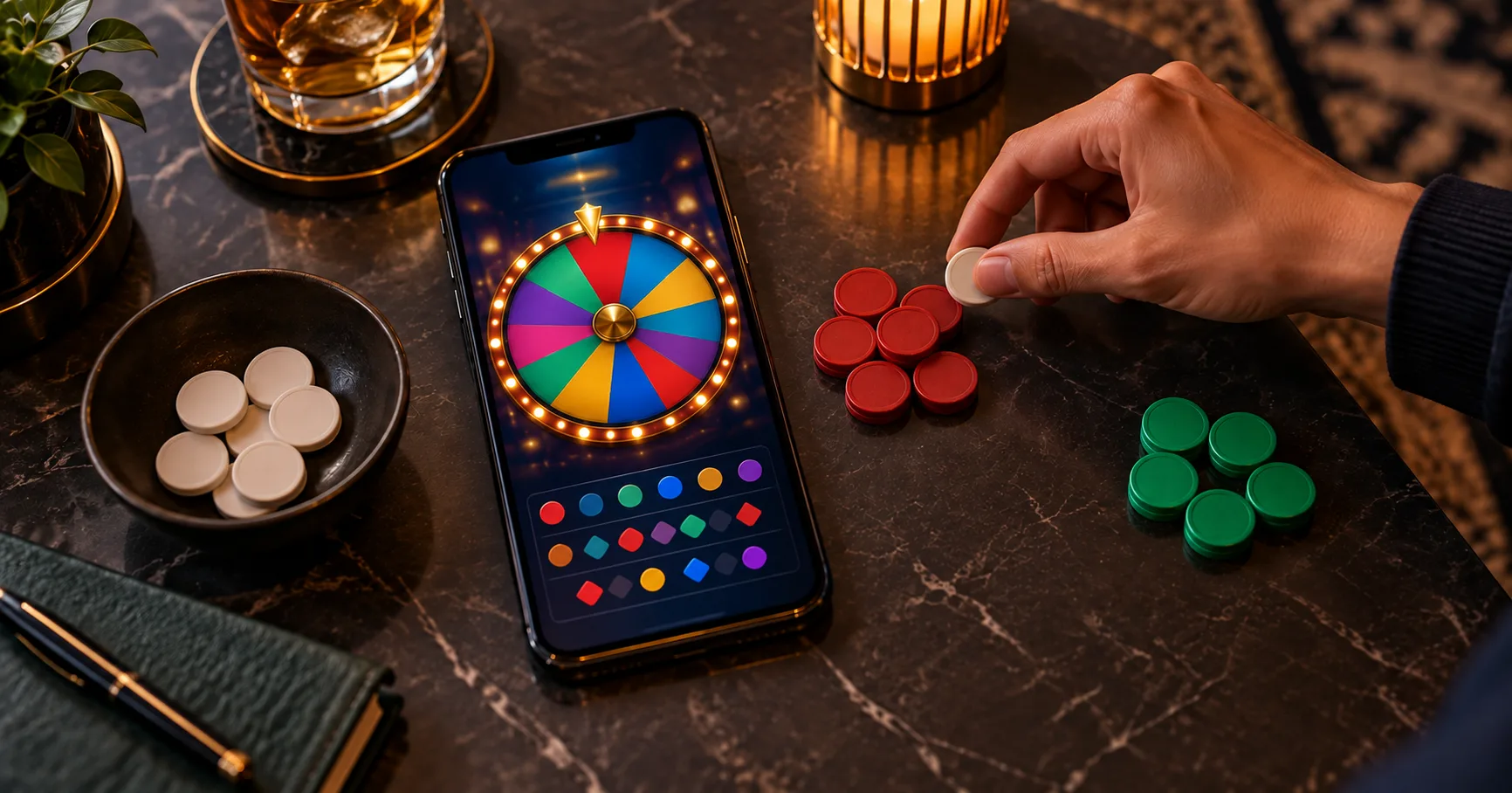
Suppose you open a Wheel demo on your phone with a simulated PHP 500 balance. You choose a PHP 10 stake and make 20 spins during a short break. The example below is hypothetical; it does not describe the rules or results of any particular game.
You stake PHP 10 on each of 20 spins, so the total amount put through the wheel is PHP 200.
Eleven spins return nothing, leaving those eleven PHP 10 stakes spent and producing PHP 0 in returns.
Six spins return 1× the stake, bringing back PHP 60 without producing a profit on those spins.
Two spins return 2× and one returns 4×, adding PHP 40 and PHP 40 respectively.
Your total return is PHP 140 against PHP 200 staked, so the simulated balance finishes at PHP 440.
The demo lost PHP 60 in this run. That is a record of 20 outcomes, not a forecast for your next 20. To translate it into a real-money decision, you need to know what the wheel pays, how likely each result is, and how much you can afford to stake.
What a demo spin actually tests
A demo is useful for learning the sequence of play on a small screen. You can see where the stake control sits, whether you must select a segment, and how the result changes the displayed balance. That matters when you play in brief bursts and might be interrupted before you finish a round.
The wheel's visible motion is a presentation of the outcome, not evidence that a nearby segment is due next. If outcomes are independently generated, the previous landing position does not change the probability of the following spin. Check the game's displayed rules for its actual selection method and payouts; an animation alone cannot establish either.
Demo credits let you make mistakes without spending cash. They also remove the pressure of watching a real balance fall. A player who casually taps through 100 simulated spins may find that even ten paid spins feel different, although the controls look identical.
Work out the return before judging the sample
Here is a separate hypothetical wheel model for interpreting the opening run. Assume ten equally likely segments: five pay 0×, three pay 1×, one pays 2×, and one pays 4×. Each multiplier means the total amount returned, including any stake returned. These are invented assumptions for arithmetic, not a claim about a real Wheel game.
For every PHP 10 staked, multiply each possible return by its probability: five tenths of PHP 0, three tenths of PHP 10, one tenth of PHP 20, and one tenth of PHP 40. Adding those amounts gives PHP 9 in expected return per spin. The difference between the PHP 10 stake and PHP 9 expected return is PHP 1 per spin.
Across 20 spins, the model gives PHP 180 in expected returns against PHP 200 staked, an expected loss of PHP 20. The opening demo returned only PHP 140, producing a PHP 60 loss instead. Both figures can be correct: one describes an average implied by the assumed probabilities, while the other describes one short run.
Why twenty spins can give the wrong impression
In the hypothetical model, the 4× segment has a one-in-ten chance on each independent spin. The chance of missing it on all 20 spins is (9/10)20, about 12%. Missing it throughout a short break would feel striking, yet it is compatible with the stated probabilities.
Landing on it once does not make a second landing more or less likely on the next independent spin. A demo streak therefore cannot reveal that a paying segment is ready to appear. Nor can one unusually good run establish the game's long-run return.
More demo spins give you more chances to inspect the controls and record the range of outcomes. They may make your observed average less erratic, but they cannot verify undisclosed probabilities. That limit matters when a real game's segments differ in size or when its rules do not give enough information to calculate each outcome's chance.
Match the demo to the paid screen
The opening calculation transfers only if the paid version uses the same relevant rules. A similar name or spinning animation is insufficient. Before treating demo observations as practice for a cash round, compare the two screens on your phone:
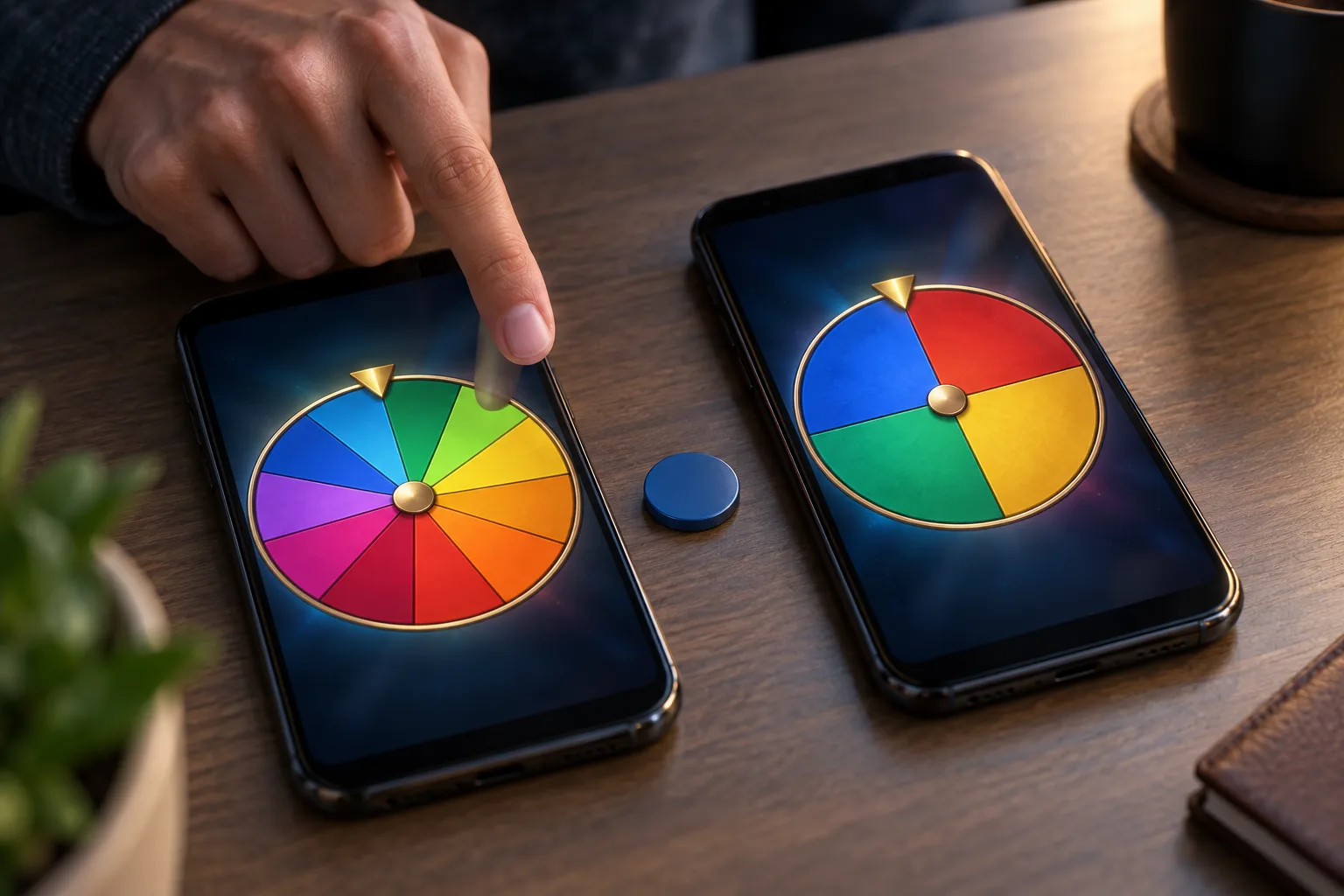
Check that both versions offer the same selectable bets and that the stake shown is the amount deducted for one completed spin.
Compare the visible segments and payout descriptions, including whether a multiplier represents total return or profit added after the stake.
Check when a tap commits the stake, because a slow connection can leave the displayed result behind the accepted action.
Look for separate rules or labels identifying a different game variant, especially when you reopen a page after a break.
If any of those details change, redo the arithmetic using the paid game's displayed rules. A demo can still teach the interface, but its recorded outcomes are not evidence for a different version's probabilities. When the probabilities are unavailable, you can calculate the cost of a chosen number of spins, but not a reliable expected return.
Turn the model into a short-session cash limit
Suppose, purely as a budgeting example, you could lose PHP 120 without needing it elsewhere. At PHP 10 per spin, that covers at most 12 spins if every spin returns zero. The limit comes from the stake and your available amount, not from the demo's PHP 440 closing balance.

Under the hypothetical ten-segment model, 12 spins carry an expected loss of PHP 12. That average is not a cap: twelve zero-return results would consume the entire PHP 120. If your time or data runs out after six spins, you have placed only six stakes; the remaining planned spins have no effect on your balance.
A lower stake can make a fixed cash limit last through more spins, where the game permits it. It does not improve the expected return per peso if the payout rules and probabilities stay the same. A larger stake buys the same pattern of possible multipliers with bigger peso swings, which may be a poor fit for a brief mobile session.
When another demo run is worth the time
Another free run is worthwhile when you still need to locate a control, understand a payout display, or learn what happens after a connection pause. It is less useful when you are simply waiting for the simulated balance to recover. That recovery cannot repay a future cash loss.
If mobile data is limited, set a specific question for each test rather than leaving the demo running. These checks give a short session a clear end:
Make one low-stakes simulated spin and note whether the displayed balance falls when you confirm the action or after the animation.
Observe one result that returns the stake and confirm whether the balance ends where it started for that spin.
Pause before a new spin and confirm that reopening the page does not cause an uncertain tap to be repeated.
Read the rules available on your screen and record any detail you could not confirm from the demo itself.
A longer sample beats a short one when your purpose is to see more kinds of outcomes or reduce random noise in a recorded average. A short test beats a long one when you only need to learn the controls. Neither approach turns an unknown payout model into a known one.
Keep simulated and account balances separate
A demo balance is a practice counter. Free Credits may be governed by account conditions, so the two should not be treated as interchangeable funds. A Bonus can also have terms that a demo screen does not show. Read the relevant displayed conditions before using either in a cash-play plan.
For a clean comparison, record each paid spin as stake, total return, and net change. A PHP 10 stake that returns PHP 20 has a PHP 10 net gain; a PHP 10 stake that returns PHP 10 breaks even. This keeps a run with frequent stake returns from looking more profitable than it is.
On a mobile connection, wait for the result and updated balance before sending another spin. If the screen stalls, check the round history or balance once the connection returns. Repeated taps make it harder to tell how many stakes were accepted.
What to carry from free play into real play
The opening demo proves that 20 PHP 10 spins staked PHP 200 and returned PHP 140 in that simulated run. It does not prove that the next run will lose PHP 60, or that the hypothetical ten-segment model describes the game you will open.
Carry over the parts you can verify: the controls, the displayed rules, the way a multiplier changes your balance, and the maximum cost of the spins you intend to make. Use a cash limit that still works if several results return nothing. Then a short break remains a short session, whatever the wheel shows.