How to Split in Blackjack: When to Separate Your Pair
Game Overview
Learning how to split in blackjack starts with a simple decision: should your opening pair remain one hand or become two separately played hands? Splitting creates another wager, so the right choice depends on your cards, the dealer’s exposed card and the table rules. More hands do not automatically mean a better result.
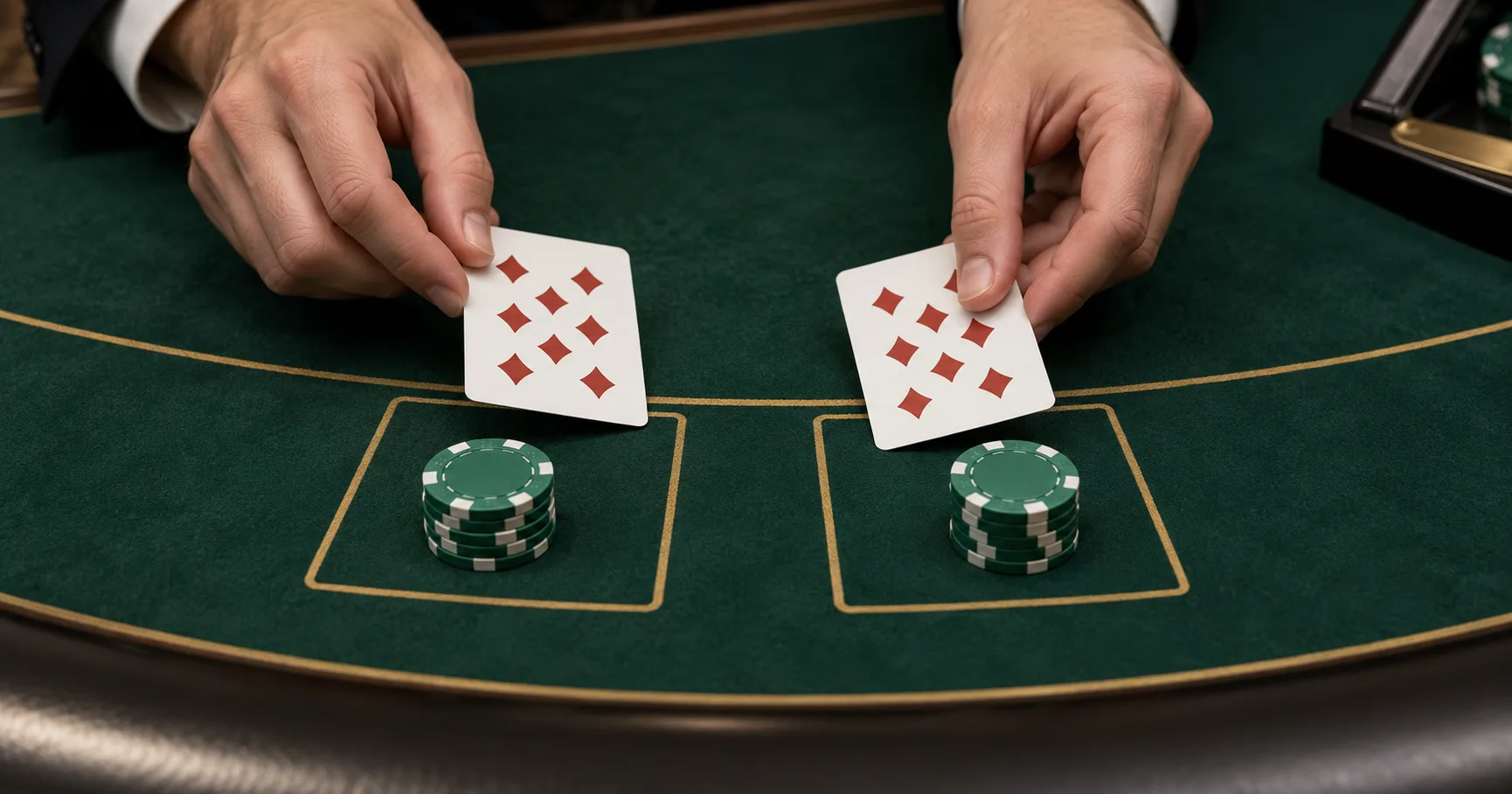
When your first two cards qualify as a pair, you can usually place an additional bet equal to your original stake and separate them. Each card becomes the starting card of a new hand. You then receive additional cards and play each hand according to the table’s rules. Each hand settles independently against the dealer.
For example, if you wager ₱100 and receive two eights, splitting normally requires another ₱100. You now have ₱200 committed across two hands. One hand can win while the other loses, both can lose, or either can push. A split is a change in how you play the round, not protection against losing it.
Before practising pair decisions, review blackjack rules for beginners. Understanding hard totals, soft totals and the dealer’s upcard makes splitting decisions much easier to follow.
How to Make a Split Bet
- Check that your first two cards qualify for splitting under the table rules.
- Look at the dealer’s upcard and use a strategy chart that matches the game.
- Confirm that you can afford the additional wager within your session limit.
- Select Split while the decision is available, or use the live table’s required procedure.
- Play each resulting hand in turn, observing any restrictions on split aces and doubling.
In live dealer blackjack, use the on-screen controls before the decision timer expires. In a physical game, follow the dealer’s instructions for placing the matching wager. A split generally applies to your initial two cards, rather than cards collected after hitting. Resplitting can be available if a new hand receives another matching card.
RTP + Volatility: What Splitting Changes
Blackjack’s return to player, or RTP, depends on the rules and the decisions you make. There is no separate fixed RTP for the Split button. A published theoretical return describes long-run play under specified assumptions; it does not predict how much of your deposit you will recover during one session.
Correct splitting can improve the expected result of a particular starting hand compared with keeping it together. That improvement can mean reducing an expected loss, rather than turning the hand into a profitable opportunity. Splitting eights is a useful example: separating a hard sixteen can be the better decision even when the dealer shows a strong card.
Volatility describes how widely results can swing. Splitting increases the money exposed during a round, and doubling after a split can increase it again. The resulting hands also face the same dealer outcome, so treating them as independent chances to spread risk would be misleading.
With a ₱100 starting wager, one split commits ₱200. If the rules allow doubling on both hands and you choose to do so, the total exposure reaches ₱400. That arithmetic matters before you select your starting stake. Read blackjack bankroll management if several bets in one round would strain your budget.
When comparing games, examine blackjack payouts, whether the dealer hits soft seventeen, doubling restrictions and surrender rules. These features affect the game’s mathematics alongside splitting. Use blackjack RTP and house edge to understand how theoretical return differs from a personal result.
Symbol Guide: Reading Pairs and Strategy Charts
Blackjack uses card ranks and strategy notation rather than slot symbols. Aces can count as one or eleven, face cards count as ten, and other cards use their face value. Suits generally do not affect the main game’s splitting decision. Side bets may use suits, but they are separate wagers.
Some tables allow any two ten-value cards to be split; others require matching ranks. A king and a queen therefore may or may not qualify. Eligibility is separate from strategy: being allowed to split a total of twenty does not make doing so a sensible basic-strategy choice.
| Notation | Meaning | How to Read It |
|---|---|---|
| A,A | A pair of aces | Check the table’s special restrictions for split aces. |
| 8,8 | A pair of eights | Treat this as a pair decision before consulting hard-sixteen advice. |
| P or SP | Split | Separate the cards and place the matching additional wager. |
| DAS | Double after split | The rules permit doubling on eligible hands created by a split. |
| H or S | Hit or stand | Draw another card or keep the current total. |
Always read the chart’s legend. Some charts use conditional instructions, such as splitting only when doubling afterward is allowed. A chart for a different ruleset can give the wrong recommendation even when the cards look identical. Keep blackjack basic strategy chart available while learning.
Strategy Tips: When to Split and When to Hold
Start With a Clearly Defined Ruleset
The starting recommendations below assume a common multi-deck game where the dealer stands on soft seventeen, doubling after splitting is allowed, surrender is unavailable, and the dealer checks for blackjack before players continue when showing an ace or a ten-value card. Use a matching chart for the full set of decisions.
- Split aces: two separate ace-starting hands offer better prospects than playing the pair together under these rules.
- Split eights: break up the hard sixteen, including against strong dealer upcards under this ruleset.
- Keep tens together: a total of twenty is already strong, so stand rather than create two weaker starting hands.
- Keep fives together: treat them as hard ten and consult the chart’s doubling or hitting instruction.
- Split nines against dealer two through six, eight or nine; stand against seven, ten or ace.
The nines decision shows why slogans have limits. Against a dealer seven, keeping eighteen is the basic-strategy play under these assumptions. Against an eight or nine, splitting is preferred. Your pair alone does not determine every decision.
Smaller pairs need particular care because doubling permissions can change the recommendation. Do not assume that advice for eights applies to twos, threes, fours, sixes or sevens. Consult the pair section of your chart before moving to hard-total instructions.
Check the Special Rules for Aces
Many tables give each split ace only one additional card. You may be unable to hit again, double or resplit another ace. These restrictions explain why split aces can behave differently from other split hands.
An ace followed by a ten-value card after splitting is commonly treated as twenty-one rather than a natural blackjack, so it generally receives the ordinary winning payout. Check the rules before assuming it earns the table’s blackjack payout. See split aces rules for the distinctions to look for.
Reassess Each New Hand
After splitting, stop thinking of the cards as one combined total. If an eight receives a three, that hand becomes eleven; the other eight may develop into something entirely different. Apply the appropriate hit, stand or double decision to each hand separately.
Doubling after a split is an option, not an automatic next step. Use when to double down in blackjack to distinguish a favourable doubling situation from a hand that simply needs another card.
Also check what happens if the dealer discovers blackjack after you have split. Games without an early dealer check can handle additional wagers differently. Whether only the original wager or additional bets are lost can change the correct strategy against a ten or ace.
Choose a starting stake that leaves room for legitimate split and double decisions within your spending limit. Never increase your budget to recover a previous loss. If the necessary additional bet is unaffordable, protect your limit and use a lower starting stake in future rounds.
Recommended Platforms: Choose by Table Rules
For practising splitting, favour a blackjack platform with accessible rules, clear controls and a practice mode where available. For real-money play, compare the specific table rather than relying on a casino’s general description. Different blackjack games on the same platform can have different splitting restrictions.
- Read the rules panel for matching-card requirements, resplitting limits and split-ace restrictions.
- Check whether doubling after splitting is permitted and which totals qualify.
- Confirm the blackjack payout, dealer soft-seventeen rule and treatment of dealer blackjack.
- Compare minimum stakes with the amount you could commit after splitting and doubling.
- Review account eligibility, withdrawal conditions and available spending controls before depositing.
Philippine players should check whether the account supports PHP and whether payment conversion or transaction charges apply. If playing with promotional funds, read the terms for blackjack eligibility, wagering contribution and maximum-bet restrictions. A promotion does not improve the underlying splitting decision.
Use live dealer versus RNG blackjack to compare pace and controls. Practise until you can recognise the pair, read the upcard and find the correct chart instruction without rushing. Play only if you meet the applicable age requirements, use money set aside for entertainment and end the session when your limit is reached.