Fishing Game or Another Game Category: What Suits Short Mobile Sessions?
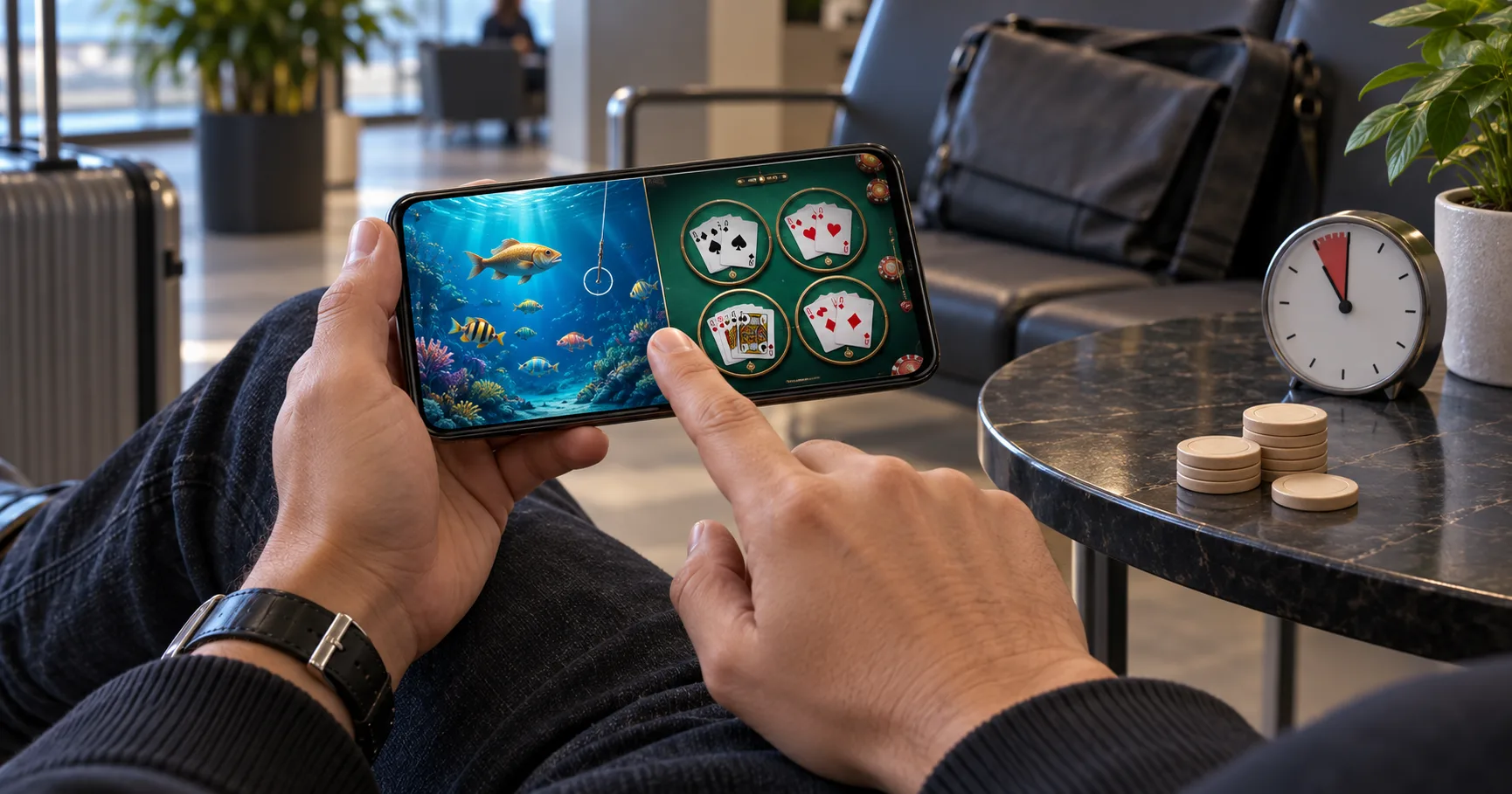
The rule is simple: choose a game category for the attention, connection and time you actually have, not for whichever promotion appears most generous. Promotions may alter available balance or eligibility conditions, but they do not change how a game consumes time, data and decisions.
That distinction matters for a mobile-only player fitting brief sessions between errands, commuting and family responsibilities. A Fishing Game can provide direct interaction without the formal pace of a table, yet it demands more continuous attention than many slot rounds. The right choice therefore depends on the conditions surrounding the session.
If attention will be divided, choose fewer live decisions
A Fishing Game usually asks the player to aim, select targets and decide when to fire. Each shot can consume a stated amount from the balance, while a successful target may return a result determined by the game’s rules. Visual effects can show target damage or impact without proving that the next shot will succeed.
This interaction suits someone who can watch the screen throughout a short burst. It becomes a poor fit when the player must repeatedly look away, answer messages or listen for a stop announcement. More shots can be released while attention is weak, especially if an automatic-fire control is active.
Slots involve fewer aiming decisions. The player normally selects a stake, starts a round and waits for its result. That makes them easier to pause between rounds, although quick repeated spins can still make spending difficult to notice. Simplicity does not make the result more predictable.
Pick a Fishing Game when you can follow targets continuously and stop firing immediately when another task needs your attention.
Pick slots when you prefer clearly separated rounds and want natural pauses without tracking several moving objects across the screen.
Skip live tables when an interruption could make you miss a betting window, dealer action or time-sensitive decision.
Skip sports betting for an instant session when you do not have time to review market rules and settlement conditions carefully.
If divided attention is unavoidable, the category with the cleanest stopping point usually wins. A Fishing Game beats live play when you want immediate control over when to stop, but slots may beat fishing when visual concentration is limited.
If you want control, separate input from outcome
Fishing play feels active because aiming and target selection are visible inputs. Those inputs can affect which target receives a shot and how quickly balance is used. They do not establish that skill alone determines whether a target produces a return.
This is the key mechanism to understand. The player controls shot placement, shot frequency and often the cost assigned to each shot. The game system controls whether the relevant conditions for a successful result are met. Without published rules proving otherwise, repeated hits should not be treated as progress owed toward a win.
Table games offer a different kind of control. In blackjack-style play, decisions follow defined rules and can influence how a hand develops, but the dealt cards remain uncertain. In roulette-style play, choosing a bet changes the covered outcomes and potential return structure, not the result itself.
Sports betting gives the player control over event and market selection. However, the outcome depends on an external event and the market’s settlement rules. Research can support a decision, but it cannot remove uncertainty.
A Wheel game generally offers the least continuous input because the main decision occurs before the spin. It suits a player who wants one discrete commitment rather than a stream of shots. Fishing is the better fit when active screen engagement is part of the appeal.
If mobile data is unstable, prefer clean interruption points
A weak connection matters differently across categories. In a Fishing Game, delayed animation can make it hard to judge whether a shot was registered, whether the displayed balance has updated or whether firing has stopped. Continuing to tap during a delay can create uncertainty when the screen catches up.

Slots also require confirmed round states, but each round usually creates a clearer checkpoint. Live casino play is more sensitive to timing because betting periods continue according to the table’s schedule. Sports markets can also suspend or change availability while an event is progressing.
Confirm that the displayed balance is stable before starting another paid action after any freeze, reconnect or loading interruption.
Disable automatic firing when the connection becomes inconsistent, because repeated actions may be harder to track during delayed screen updates.
Capture the visible round or session reference if an action appears unresolved, while keeping private account details outside shared images.
Avoid repeating the same input merely because its animation is delayed, since the original request may already have reached the game.
Leave timed live play when disconnections are common, because the table may continue while the mobile screen is attempting to reconnect.
Fishing can still suit mobile data when the connection is stable enough for responsive controls. When interruptions occur frequently, a category with obvious completed-round boundaries is easier to audit. The deciding condition is not visual excitement but whether each paid action can be identified afterward.
If the session is brief, measure actions rather than minutes
A ten-minute limit does not by itself control spending. Two players can spend very different amounts during the same interval because action frequency and cost per action differ. Fishing makes this especially visible: total shot cost is the cost per shot multiplied by the number of shots released.
Slots follow similar arithmetic through stake per spin and spin count. A table game may involve fewer decisions, but each commitment can be larger. Sports betting can involve only one wager, although research and settlement extend beyond the immediate mobile session.
Hypothetical worked example: comparing a PHP 500 session cap
Assumption: A player starts with PHP 500 and reserves PHP 200 rather than making the entire balance available for one short session. This is an illustration, not the terms or configuration of any real platform.

Suppose the chosen Fishing Game allows a hypothetical PHP 2 shot. A maximum of 50 shots would cost PHP 100 because PHP 2 multiplied by 50 equals PHP 100. If those shots produce PHP 35 in total returns, the displayed session change is PHP 35 minus PHP 100, or negative PHP 65.
The player would then have PHP 135 of the PHP 200 session amount remaining. The untouched PHP 300 reserve remains outside the session calculation. Returns should be added only after they are actually credited, rather than assumed from hit animations.
Now compare a hypothetical slot choice using PHP 5 for 20 rounds. The committed amount is also PHP 100 because PHP 5 multiplied by 20 equals PHP 100. If the rounds return PHP 35, the net change is the same negative PHP 65, despite the different visual experience.
The arithmetic shows what does not change across categories: cost minus credited returns determines the balance movement. Fishing offers more actions and aiming decisions in this example, while slots offer fewer, more distinct rounds. Neither structure promises the better result.
If a promotion changes, keep the category test unchanged
A promotion may provide a separate balance, impose eligible-game conditions or require a specified amount of qualifying play. Those conditions can change the value of participation, but they cannot make an unsuitable game format fit a distracted player.
Before using a Promo Code, verify whether it changes only eligibility or also creates restrictions on games, stakes and withdrawals. A Bonus balance should also be tracked separately from cash whenever the displayed account distinguishes them. These checks protect the comparison from a misleading headline value.
Free Credits may reduce the player’s initial cash exposure, yet their usefulness still depends on eligible actions and any attached conditions. They do not make unstable mobile data reliable, turn continuous play into pause-friendly play or guarantee a return.
The durable decision is therefore category first, offer second. Choose fishing for responsive interaction, slots for simple round boundaries, tables for structured rule decisions, live casino for uninterrupted real-time attention, and sports betting for event-based analysis followed by later settlement.
If two categories still fit, use the stopping test
Several categories may remain reasonable after attention and connectivity are considered. The tie-breaker should be how clearly the player can stop, calculate the cost and understand what remains unresolved.
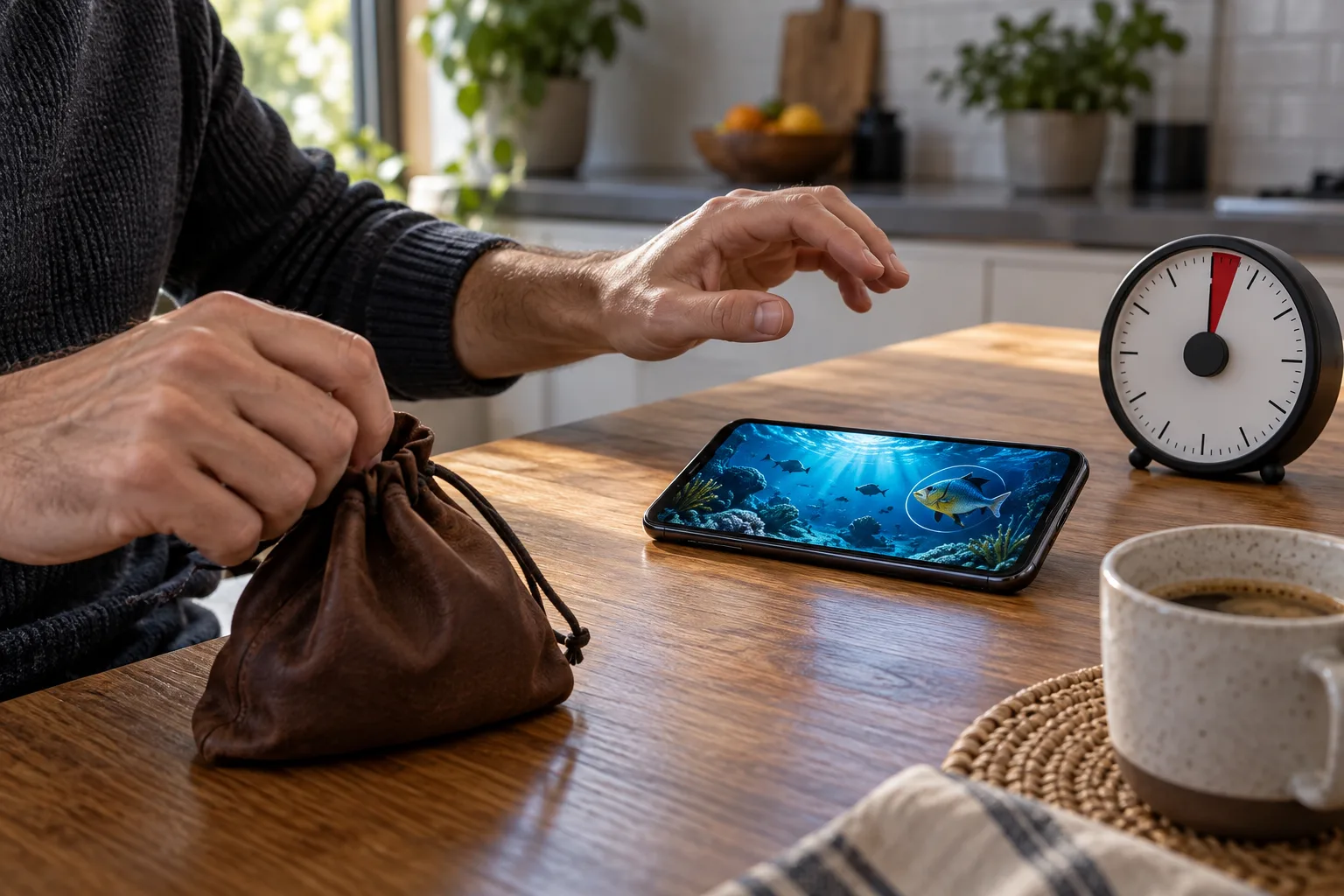
Choose fishing when manual aiming is enjoyable, every shot cost is visible and you can stop without chasing a heavily hit target.
Choose slots when distinct completed rounds make spending easier to count during a short break between other responsibilities.
Choose table games when you understand the rules and want each decision tied to a defined hand or betting cycle.
Choose live casino only when your connection and attention can remain uninterrupted through the complete betting and settlement sequence.
Choose sports betting when reviewing the market is part of the activity and waiting for settlement does not undermine your session plan.
The emotional stopping test matters as much as the technical one. Fishing targets can appear close to yielding a result, but previous shots do not prove that one more shot is justified. Slots can create the same pressure through near-miss presentation, while tables can encourage recovery attempts after a losing hand.
Stop when the planned action count, spending cap or available time is reached. Do not replace one limit with another after play begins. During the Philippine Christmas-season build-up, short breaks can become unpredictable, so a category with an immediate exit point may be more practical than scheduled live action.
The category should fit the interruption, not fight it
A Fishing Game is strongest for a mobile player who wants active control over target selection and can give the screen steady attention for a defined burst. It is weaker when the connection is inconsistent, interruptions are frequent or automatic firing makes action costs difficult to follow.
Slots generally suit cleaner pause points. Table games suit players who value formal decision rules, while live casino play requires uninterrupted timing. Sports betting suits research-led choices whose outcomes can settle beyond the mobile session.
Promotions will change, but those differences remain. Match the game’s action rhythm to your available attention, then confirm the cost of each action and the point at which the session ends. That rule gives a more reliable choice than any temporary offer headline.